
Supraorbital neuralgia is pain from the supraorbital nerve. This trigeminal branch exits the brow ridge just under the skin. A direct hit to the brow presses it against bone. It causes forehead pain above one eye that never switches sides. It is confirmed when a nerve block relieves it.
A blow to the eyebrow can leave a headache behind long after the bruise has gone. Is your forehead pain always on the same side, above one eye? Can you find a tender spot on the brow ridge? Then this is a specific, treatable diagnosis, not an unexplained headache.
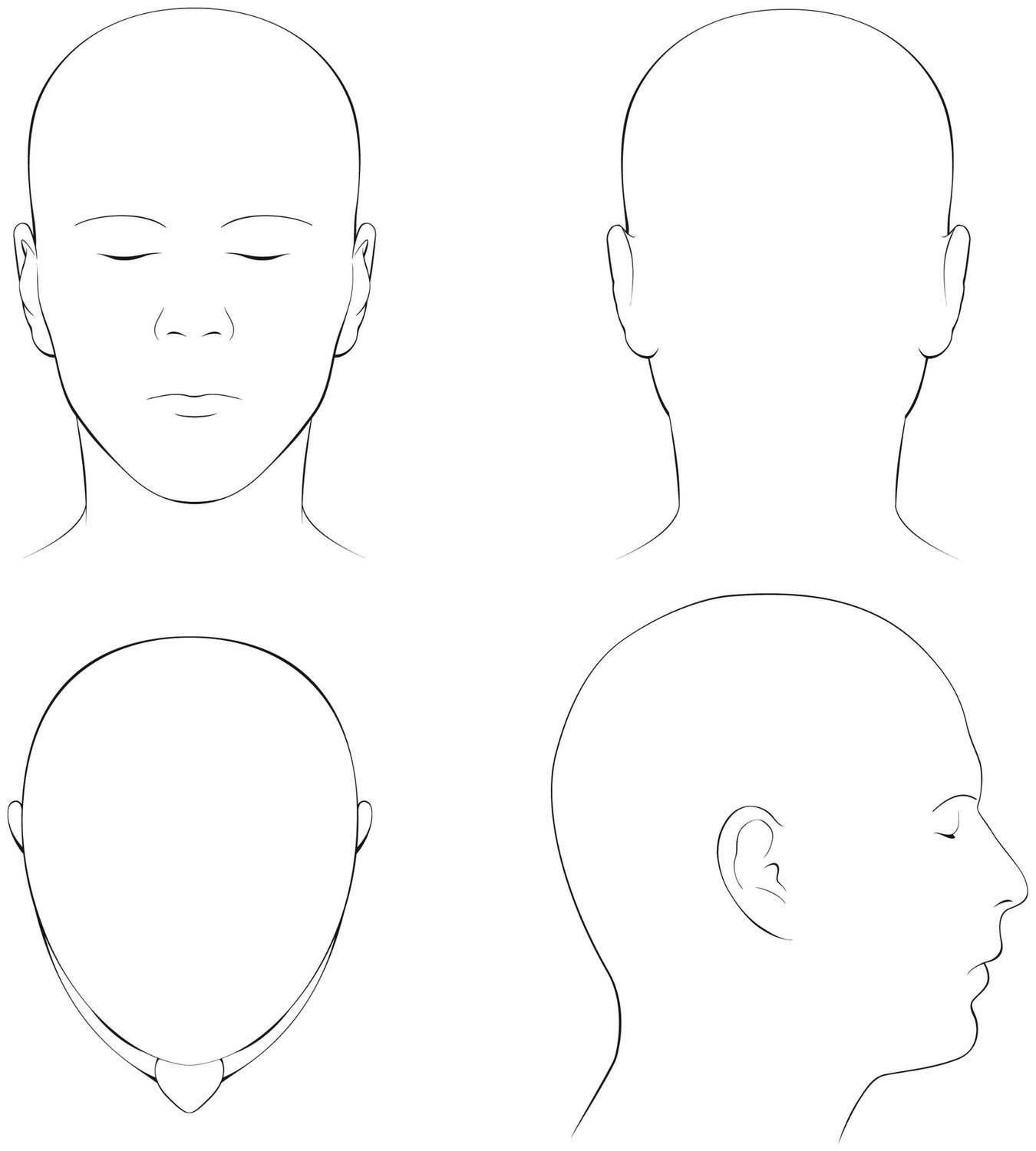
Why does an eyebrow injury damage the supraorbital nerve?
The supraorbital nerve is a branch of the first division of the trigeminal nerve. It leaves the skull through the supraorbital notch or foramen. That is a gap you can feel on the upper rim of the eye socket, about a third of the way out from the midline. From there the nerve fans out to supply the forehead and the front of the scalp.
At that exit point it is close to the surface and lies against bone. Only skin, muscle and eyebrow cover it. A direct blow to the brow presses the nerve against the orbital rim (the bony edge of the eye socket). That anatomy is why this happens after an elbow in basketball, a fall onto the brow, a windshield or airbag impact, an assault, or a laceration (cut) repaired over the eyebrow. Surgery in the area, including brow lifts, can do the same thing.
What does supraorbital neuralgia feel like?
Supraorbital neuralgia has a described diagnostic triad. It is made up of forehead pain in the area the nerve supplies, without switching sides; tenderness over the supraorbital notch or along the path of the nerve; and complete but temporary relief of the pain when the nerve is blocked with local anesthetic.1
One series followed 18 patients over seven years. The pain was typically dull, with short sharp or burning flares. It sat in the forehead and around the eye. Five of the 18 had a history of trauma to the forehead on the same side. About two-thirds were women. Average age at onset was 51.6 years. By the time they were studied, they had been in pain for an average of 5.9 years.2
Two features point specifically toward a nerve injury rather than a primary headache:
- It never changes sides. Migraine can favor one side but generally shifts at least now and then. A pain rigidly locked to one side of the forehead for years is doing something different.
- The skin over it behaves oddly. Numbness, pins and needles, or a forehead that hurts to light touch or to the brush of a hairbrush. In a population study, around half the cases found had measurable loss of feeling on the affected side.3 These sensory features, and sharp jabbing pains, are reported more often in the post-traumatic form than in cases with no injury behind them.1
How common is supraorbital neuralgia?
The literature describes supraorbital neuralgia as rare. In headache clinics it is diagnosed rarely. A population study points the other way. It looked at 1,838 residents aged 18 to 65 in Vågå, Norway, which was 88.6% of those eligible. Ten met the case definition, a prevalence of about 0.5%.3
The case definition used in that study is worth reading closely, because trauma was built into it. It required unilateral forehead or eye pain, firmly one-sided. It required more tenderness over the nerve’s exit point. And it required preceding trauma to the forehead or supraorbital rim on the same side.3
Half a percent of a general population is not rare. The likeliest reading of the gap is that the diagnosis is under-recognized, not truly uncommon. People with a decades-old brow injury and a one-sided forehead headache are being carried under a different label. Still, that is a single population, in one Norwegian valley. The figure should be treated as one good estimate rather than a settled number.
What can supraorbital neuralgia be mistaken for?
- Migraine. The overlap is real, and the two can coexist. Side-locking, a tender notch and changed feeling on the forehead are the features that should prompt a second look. See migraine treatment.
- Sinus headache. Frontal pain above the eye is routinely blamed on the frontal sinus. See is it a sinus headache or a migraine.
- Cluster headache. Also strictly one-sided and centered around the eye. But it has prominent tearing, a stuffy nose and a striking circadian (daily timing) pattern. Supraorbital neuralgia does not have these. See migraine or cluster headache.
- Post-concussive headache. A blow hard enough to injure the nerve may also have caused a concussion. Both can be present. One does not rule out the other.
- Thyroid eye disease. A review looked at 1,126 patients with thyroid eye disease. Of them, 8% reported a distinct pain suggestive of supraorbital neuralgia. All of them had complete relief from a supraorbital nerve block.4 This is worth knowing if there is eye bulging or a thyroid history.
How is supraorbital neuralgia diagnosed and treated?
There is no scan for this. The diagnosis is made from the pattern, the tender point, and the response to numbing the nerve. Complete relief while the anesthetic is working confirms that the pain is coming from that nerve.1 A negative result tells you just as much. It says the pain is coming from somewhere else, and the diagnosis moves on.
That is only true if the injected medicine reached the nerve. This is the reason every injection here is placed under imaging rather than by feel. See ultrasound and fluoroscopic guidance and why image guidance matters. A failed landmark (by-feel) block tells you nothing at all.
Medication tends to disappoint here. In the 18-patient series, trials of various drugs gave only slight relief. These included migraine and anti-neuralgic drugs. By contrast, anesthetic block of the nerve gave absolute relief for as long as it lasted.2 Relief often outlasts the anesthetic’s own action, sometimes by weeks. See do nerve blocks for headache work and trigeminal nerve block.
For the minority who do not respond durably to blocks, other options exist in the literature. One study used pulsed radiofrequency on the supraorbital nerve under ultrasound in 22 patients with refractory (hard-to-treat) disease. At least 50% pain reduction was reached in 77% at one and three months, 73% at six months, 64% at one year and 50% at two years. About a quarter had mild upper-eyelid bruising, and there were no serious complications.5 That is a small, single-arm study with no control group. So treat it as encouraging rather than established.
What to bring to the appointment
- When the injury happened, and what hit you. Decades ago still counts.
- Whether the pain has ever been on the other side. Be precise here. It carries more diagnostic weight than the severity.
- Whether the forehead skin on that side feels different: numb, tingling, or too sensitive.
- Anything already tried, including migraine treatments, and whether any of it helped.
- Any scar over the eyebrow, and any surgery in the area.
Frequently asked questions
My eyebrow injury was years ago. Can it still be the cause?
Yes. In one series the average time in pain before assessment was 5.9 years. Cases have been described far longer after the injury than that.2 An old injury is a reason to examine the nerve, not to dismiss it. Contact us with the history and we can tell you whether it is worth assessing.
How do I know if it is this and not migraine?
The strongest clue is that the pain never moves to the other side. That is combined with a tender spot on the brow ridge and changed feeling on that side of the forehead.1 The two can also coexist. See migraine or tension-type headache for how the primary headaches are told apart.
Does the diagnostic block hurt, and will I need sedation?
No sedation, and you drive yourself home. It is a superficial injection over the brow ridge and takes seconds. What to expect from a nerve block describes the same process at the back of the head.
What if the block does not help at all?
Then, as long as it was image-guided, that is a useful result, not a wasted visit. It means the pain is not coming from that nerve, and the diagnosis moves elsewhere. See why image guidance matters.
Will the numbness on my forehead come back?
Loss of feeling from the original injury may or may not recover. Treating the pain does not necessarily restore feeling. The anesthetic itself causes temporary numbness over the forehead that fades in hours. That is the expected effect of blocking that nerve. See trigeminal nerve block.
What are the first signs of supraorbital neuralgia?
Pain in the forehead above one eye that stays on the same side every time. It comes with a tender spot on the brow ridge where the nerve exits. The skin on that side often behaves oddly: numbness, pins and needles, or a forehead that hurts to light touch or the brush of a hairbrush. The pain is usually dull, with short sharp or burning flares.
What causes supraorbital neuralgia?
A direct blow to the brow that presses the nerve against the bone of the eye socket. There, it lies just under the skin. Typical causes are an elbow in basketball, a fall onto the brow, a windshield or airbag impact, an assault, or a cut repaired over the eyebrow. Surgery in the area, including a brow lift, can do the same.
Can supraorbital neuralgia go away?
Left alone, it tends to persist. In one series, people had been in pain for an average of 5.9 years before assessment. A nerve block relieves the pain completely while it works. The relief often lasts well beyond the anesthetic, sometimes by weeks. For the few who do not respond durably, pulsed radiofrequency to the nerve is another option.
Sources
- Pareja JA, Caminero AB. Supraorbital neuralgia. Curr Pain Headache Rep. 2006;10(4):302-305. doi:10.1007/s11916-006-0036-9
- Caminero AB, Pareja JA. Supraorbital neuralgia: a clinical study. Cephalalgia. 2001;21(3):216-223. doi:10.1046/j.1468-2982.2001.00190.x
- Sjaastad O, Petersen HC, Bakketeig LS. Supraorbital neuralgia. Vågå study of headache epidemiology. Cephalalgia. 2005;25(4):296-304. doi:10.1111/j.1468-2982.2004.00856.x
- Patrinely JR, Hamilton KL, Parke RB, Patrinely JR, Soparkar CNS. Supraorbital neuralgia associated with thyroid eye disease. Ophthalmic Plast Reconstr Surg. 2021;37(3):230-235. doi:10.1097/IOP.0000000000001762
- Luo F, Lu J, Ji N. Treatment of refractory idiopathic supraorbital neuralgia using percutaneous pulsed radiofrequency. Pain Pract. 2018;18(7):871-878. doi:10.1111/papr.12687
Supraorbital neuralgia answers to a targeted block of that one small nerve above the eye, a branch of the trigeminal nerve. It is treated at our headache clinic in St. Louis, with the trigeminal nerve block covering the wider family.