
Image guidance matters because it puts the medication where it is meant to go. Ultrasound or fluoroscopy makes a headache injection work more often. It keeps the needle clear of the vessels beside the target. And it makes a negative result trustworthy.
If you have had an injection for headache that did not help, the first question is not whether the treatment works. It is whether the needle got where it was meant to go.
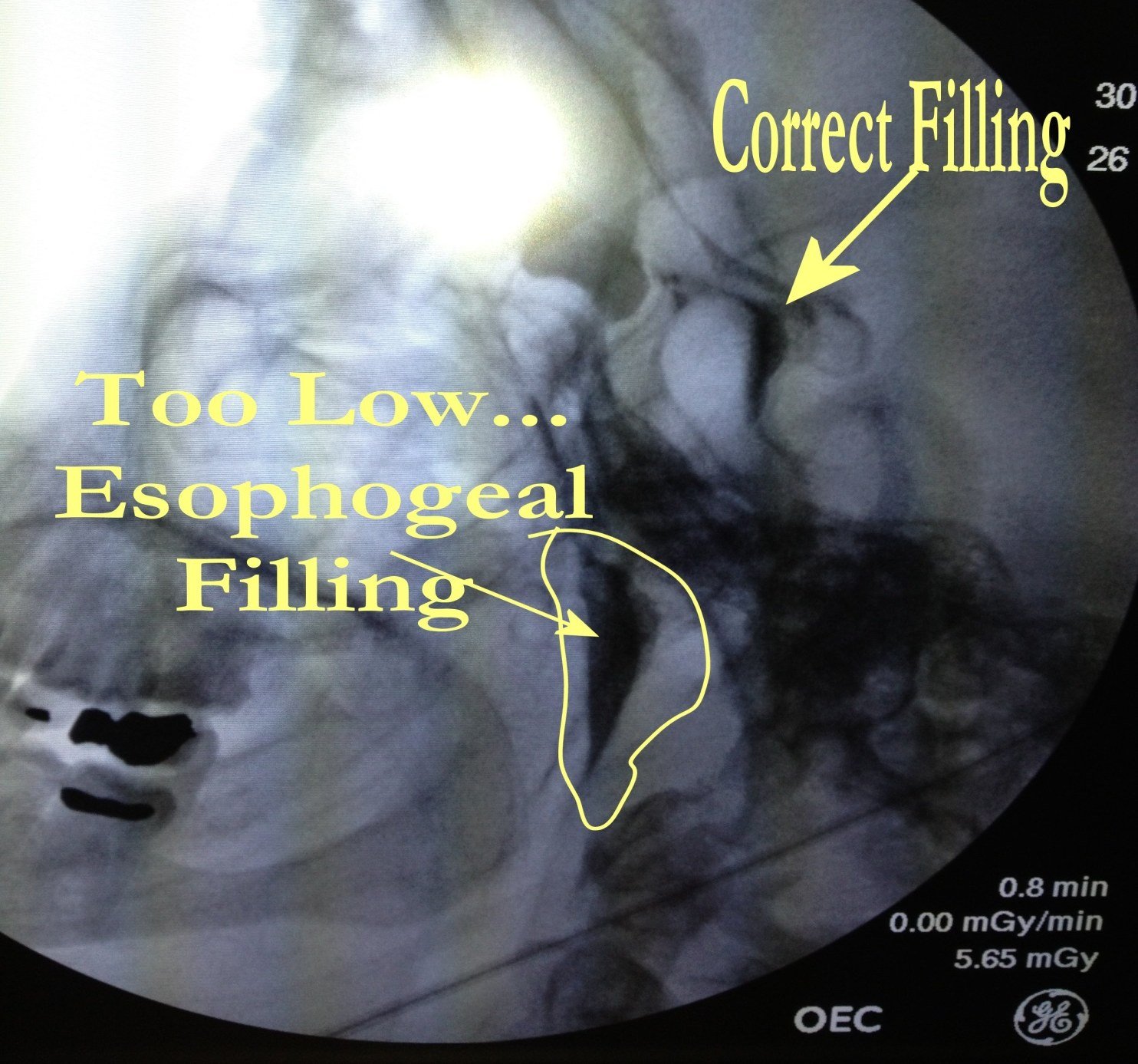
Every injection at this clinic is placed under ultrasound or fluoroscopic guidance. Not as an upgrade, not on request — as the default.
Three separate reasons
It works more often
When a needle is placed by surface landmarks — feeling for a bony bump and estimating the rest — it goes where the anatomy is usually found. Anatomy varies between people. If the medication does not reach the target, the block fails. It fails for a reason that has nothing to do with whether the treatment is effective.
It is safer
Around the head and neck, the structures you are avoiding sit millimeters from the ones you are aiming at. The occipital artery runs alongside the occipital nerve. The stellate ganglion sits among the carotid artery, the internal jugular vein, the vertebral artery, the thyroid and the esophagus. The atlanto-axial joint is next to the vertebral artery and the C2 nerve root. The spinal cord is millimeters away.
A landmark technique cannot see any of them. Ultrasound shows vessels and soft tissue in real time, with Doppler to confirm which is which. Fluoroscopy shows the needle against bone from multiple angles. Contrast is injected first. It confirms both that the medication will reach the target and that the needle has not entered a vessel.
A negative result becomes trustworthy
This is the one people do not think about, and it may be the most valuable. A great deal of headache diagnosis rests on diagnostic blocks — ICHD-3 (the international classification of headache disorders) accepts abolition of the headache by diagnostic blockade as evidence that a cervical structure is the cause.1
That logic only holds if you know the block reached its target. An unguided block that fails cannot be interpreted: it may have missed. A guided block that fails tells you the pain is arising somewhere else. That is real information you can act on. See do nerve blocks for headache actually work.
Which technique, and why
Ultrasound
Real-time soft-tissue imaging, no radiation. Used for the stellate ganglion block, for occipital nerve blocks, and for the superficial trigeminal branches. The needle is watched moving through tissue as it advances.
Fluoroscopy
Live X-ray, for targets defined by bone. Used for the atlanto-axial (C1–C2) injection, for cervical facet and medial branch work, and for deeper trigeminal approaches. Contrast is injected first and watched as it spreads.
What it means for you
Practically: a procedure that takes a few minutes longer, and a result you can rely on either way.
Maybe you have had an injection elsewhere that did not help. If so, it is worth finding out whether it was image guided. A repeat of the same block done properly is a different test, not a repeat. See ultrasound and fluoroscopic guidance.
Common questions
Does image guidance make the injection hurt more?
No. Ultrasound adds a probe on the skin and nothing else. Fluoroscopy adds positioning time. Neither adds pain, and better placement often means less discomfort. See image guidance.
Is the radiation from fluoroscopy a concern?
Exposure for a single targeted injection is low and used only where bony landmarks require it. Where ultrasound can do the job, we use ultrasound and there is no radiation at all. See image guidance.
How do I ask whether my previous injection was guided?
Ask directly whether ultrasound or fluoroscopy was used, and whether contrast was injected. If neither was, a failed result does not tell you the treatment was wrong for you. See contact us.
Are some injections safe without guidance?
Some superficial blocks are routinely done by landmarks. But the ones we do around the neck — stellate ganglion and atlanto-axial in particular — are not among them, and we do not perform those blind. See atlanto-axial injection.
Headache injections here are placed under ultrasound or fluoroscopy, from occipital nerve blocks to C1–C2 injections. That precision is how our St. Louis headache care is done.
Sources
- Headache Classification Committee of the International Headache Society. ICHD-3, 11.2.1 Cervicogenic headache. ichd-3.org