A sphenopalatine ganglion (SPG) block numbs a nerve relay just behind the nose. It is the one that drives the tearing and congestion of a cluster attack. It also carries fibers relevant to migraine and facial pain. It takes about fifteen minutes.
Anesthetic delivered through the nostril to a nerve bundle sitting just behind the nasal cavity. No needle, no sedation, and you are upright the whole time.
What is the sphenopalatine ganglion?
The sphenopalatine ganglion is a small collection of nerve cell bodies behind the nose. It sits roughly level with the middle of the cheekbone. It is the relay point for much of the autonomic supply to the face — the tearing, the nasal congestion, the flushing and the drooping eyelid that come with a cluster attack are that system firing. It also carries sensory fibers relevant to migraine and to facial pain.
It sits right behind the nasal mucosa (the lining of the nose). Because of that, it can be reached topically, from the surface. That anatomical accident is what makes this one of the least invasive nerve blocks in medicine.
How is an SPG block done?
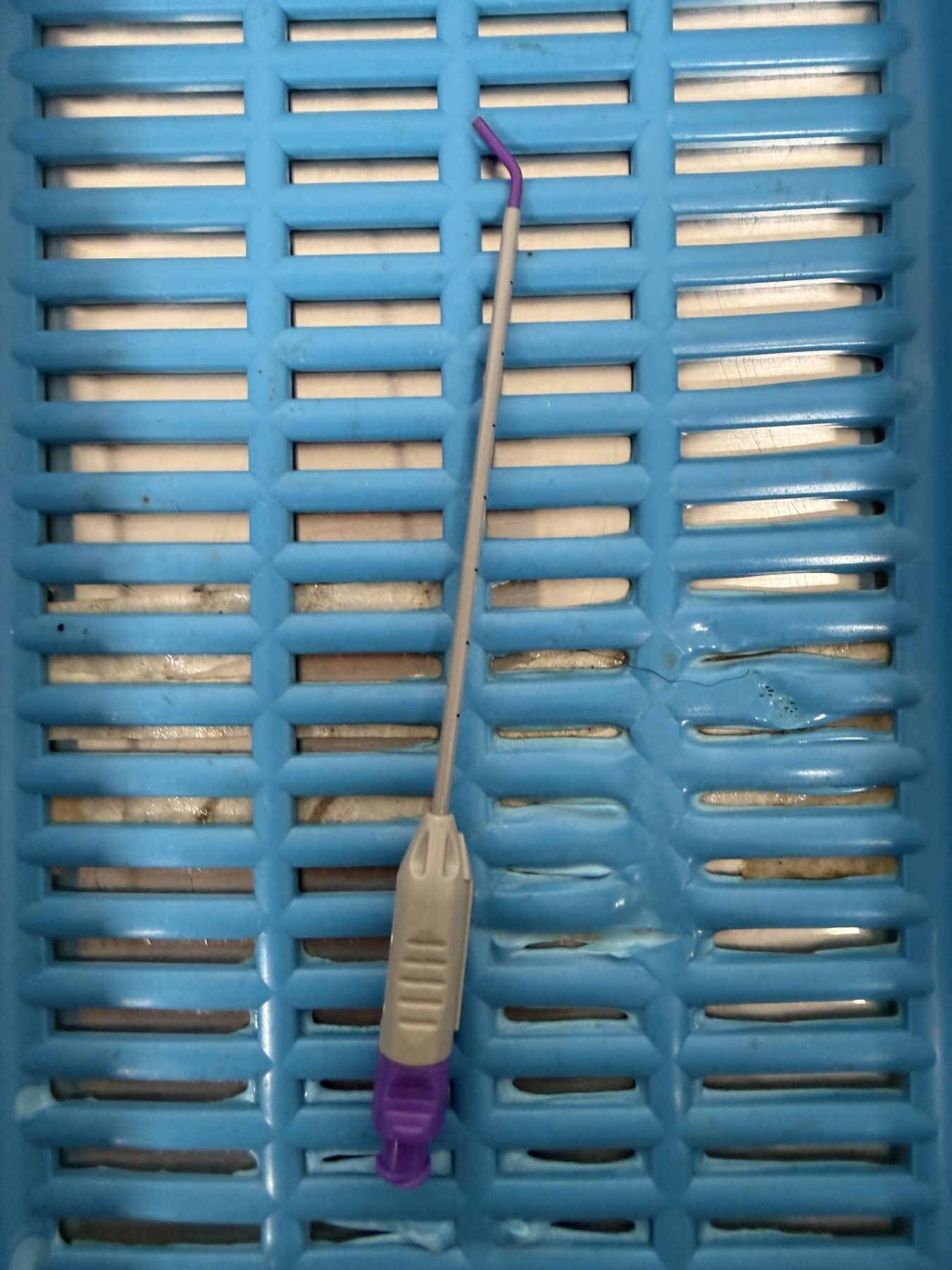
You lie back or recline. A thin soft catheter (tube) is passed along the floor of the nostril. Local anesthetic is delivered against the mucosa over the ganglion. It is held in place for a few minutes. Then the other side is done. Most people describe pressure and a bitter taste at the back of the throat rather than pain.
The whole thing takes about fifteen minutes. There is no injection into the face, no imaging, and no recovery period beyond sitting up slowly.
How long does relief from an SPG block last?
The throat numbness is gone in about an hour; the pain relief is the part that counts, and it is judged over the following day rather than the following minutes. In a 2014 controlled trial of 38 adults with chronic migraine, the drop in pain seen 15 minutes after a bupivacaine block had largely held at 24 hours, while the saline group had drifted back above where it started. Those blocks were repeated twice a week for six weeks, which is the honest reading of the data: the effect is real, and it is not a single permanent switch.
How many you need is decided by how your headache answers the first one, not by a pre-booked series. A clear but short response tells us the ganglion is part of the circuit, and that is when the plan turns to prevention that keeps the window open — sleep, the medicine cabinet, the metabolic load that keeps a sensitized system firing. The block buys the quiet; the rest of the plan has to fill it. The mechanics are laid out in the SPG block explained.
How well does an SPG block work?
The evidence for SPG blocks is real but more modest than for oxygen in cluster headache. Trials have generally shown a meaningful drop in pain scores over the days after treatment, rather than a reliable instant abort. The effect size varies considerably between studies and between people. It is a reasonable option when a headache is not responding to first-line treatment, when you cannot tolerate the usual drugs, or when you want to avoid an injection — not a guaranteed switch.
Common after-effects are minor: a numb throat for an hour or so, a bitter taste, occasional brief nosebleed. It is avoided if you have an active nasal infection or a recent nasal fracture.
![Diagram of correct SphenoCath [soft nasal catheter for sphenopalatine ganglion block] placement, showing the catheter passing below the middle turbinate into the spheno-ethmoid recess to reach the sphenopalatine ganglion and the Vidian canal](https://headache.express/wp-content/uploads/2026/08/spg-catheter-placement-diagram.jpg)
Frequently asked questions
What are the side effects of a sphenopalatine ganglion block?
Common after-effects are minor: a numb throat for an hour or so, a bitter taste at the back of the throat, and an occasional brief nosebleed. There is no injection into the face and no recovery period beyond sitting up slowly. The block is avoided if you have an active nasal infection or a recent nasal fracture.
Does an SPG block hurt?
Most people describe pressure and a bitter taste rather than pain. A thin, soft catheter is passed along the floor of the nostril. The anesthetic is held against the lining over the ganglion for a few minutes on each side. There is no needle and no sedation.
How long does an SPG block take?
About fifteen minutes from start to finish. One side is done and held for a few minutes, then the other. No imaging is needed, there is no injection, and there is no recovery period beyond sitting up slowly afterward. Please contact us before coming in so the right treatment is ready.
When is an SPG block a good choice?
It is a reasonable option when a headache is not responding to first-line treatment, when you cannot tolerate the usual drugs, or when you want to avoid an injection. It fits cluster headache most closely, because the ganglion drives the tearing and congestion of an attack. It also carries fibers relevant to migraine and facial pain.
Can I drive myself home after an SPG block?
You can. Nothing about the block slows your reactions: the anesthetic stays on the lining of the nose, you are never sedated, and you leave once you have sat up for a minute. The only thing to wait for is food and drink, roughly an hour, until the back of your throat has feeling again. See what a same-day headache visit involves.
Sources
- Cady R, Saper J, Dexter K, et al. A double-blind, placebo-controlled study of repetitive transnasal sphenopalatine ganglion blockade with tx360(®) as acute treatment for chronic migraine. Headache, 2014. PMID 25338927. pubmed.ncbi.nlm.nih.gov
- Robbins MS, Starling AJ, Pringsheim TM, et al. Treatment of Cluster Headache: The American Headache Society Evidence-Based Guidelines. Headache, 2016. PMID 27432623. pubmed.ncbi.nlm.nih.gov
- Barad M, Ailani J, Hakim SM, et al. Percutaneous Interventional Strategies for Migraine Prevention: A Systematic Review and Practice Guideline. Pain medicine (Malden, Mass.), 2022. PMID 34382092. pubmed.ncbi.nlm.nih.gov
Booking online shows our scheduled openings; call or text for hours that are not listed. Please contact us before coming in rather than arriving unannounced — we need to know what is happening to have the right treatment ready.
A note on coverage, and on timing. Same-day treatment and prior authorization do not run on the same clock. Many insurers take days to weeks to decide, and some acute headache treatments are not covered at all. Your headache will not wait for that process.
We will verify your benefits and, where a treatment needs prior authorization, we will attempt to obtain it. An authorization confirms that a service meets criteria for review — it is not a guarantee of payment, and no clinic can make that promise on your insurer’s behalf. Where something is unlikely to be covered, or cannot be certified in time to treat you today, we will tell you before we treat rather than after, so the decision is yours. Payment is due at the time of service.