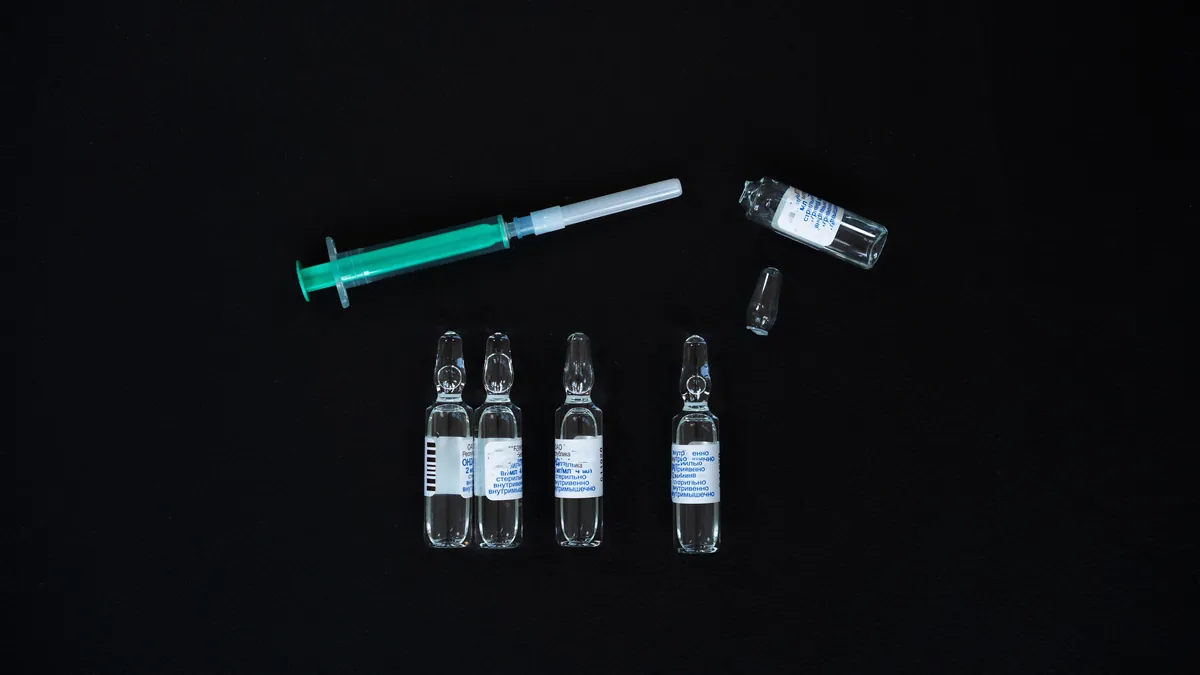
An occipital nerve block is a local anesthetic: lidocaine, bupivacaine or both. Sometimes a steroid such as triamcinolone or methylprednisolone is added. In the randomized evidence, it is the anesthetic, not the steroid, that reduces how often headaches come.
Most people assume the steroid is the part that works. They think the anesthetic is just there to make the shot comfortable. The trial evidence points the other way. It is worth understanding before you agree to a steroid you may not need.
What medication is used in an occipital nerve block?
An occipital nerve block is a local anesthetic. It is commonly lidocaine, bupivacaine, or both together. One is fast and short-acting. The other is slower and longer-lasting. A corticosteroid such as triamcinolone or methylprednisolone is sometimes added. Whether it should be is the interesting question.
What happened when a trial tested exactly that
A randomized, double-blind, placebo-controlled trial in episodic migraine without aura made the clean comparison. It randomized patients to four arms: triamcinolone alone, lidocaine alone, triamcinolone plus lidocaine, and saline (salt water).1
Headache severity and duration fell significantly in all four groups, including saline. There was no difference between groups. But when frequency was examined, only the two arms with lidocaine showed a significant drop from baseline.1 The steroid-only arm did not.
Fifty-five patients completed that study. So it is not a large trial, and it should not be treated as the final word. But the direction fits the wider picture. The meta-analysis that specifically tested local anesthetics against placebo in chronic migraine found meaningful drops in headache intensity and frequency in the first two months.2
Why is a steroid added to an occipital nerve block?
Partly by analogy with other injections, where steroid addresses an inflammatory process. Occipital neuralgia and cervicogenic headache may involve a truly irritated or trapped nerve. There, the case for a steroid makes more sense than it does in migraine.
Partly habit. It is the local practice pattern, and it rarely gets looked at again.
What are the downsides of a steroid in a nerve block?
- A facial flush for a day or two.
- A brief rise in blood sugar, which matters if you are diabetic.
- With repeat shots at the same site, thinning of the fat under the skin or a pale patch. These show at the back of the head and do not reliably reverse.
- A practical limit on how often the injection can be repeated. An anesthetic-only block does not have that limit.
In the four-arm trial, side effects were reported only in patients who got triamcinolone.1
How do we decide whether to add a steroid?
By what the block is for. Take a purely diagnostic question: is this pain coming from this nerve? For that, anesthetic alone is the cleaner test. That is because the answer arrives and leaves on a known timetable. It is not blurred by a slow-acting drug. See do nerve blocks for headache work.
Sometimes there is a plausible inflammatory or entrapment component. Then a steroid may be added on that reasoning. It is reviewed by whether it actually bought anything. Say two blocks with steroid and two without perform the same for you. That is your answer, and the steroid comes out.
Common questions
What steroid is used in an occipital nerve block?
When one is used, usually triamcinolone or methylprednisolone. Whether one should be added at all is truly open. A four-arm randomized trial found the lidocaine groups, not the steroid-only group, were the ones that reduced headache frequency.1
The side effects a steroid adds are covered in Occipital nerve block: side effects and risks.
Can I have the block without steroid?
Yes, and for a diagnostic block that is often better. Say so at your appointment, or raise it when you get in touch.
If the steroid is not doing much, why does the block work at all?
The most likely explanation is that the block interrupts input into the trigeminocervical complex. That is where neck and head sensory pathways meet. This is an anesthetic effect, not a steroid one. See how long an occipital nerve block lasts.
I am diabetic. Does that rule out a block?
Not at all. It is a reason to prefer anesthetic alone. Or, if a steroid is used, plan for a couple of days of higher readings. Mention it before the injection. See side effects and risks.
How many times can you have an occipital nerve block?
How often a block can be repeated depends mostly on what is in it. Repeated steroid at the same site can thin the fat under the skin or leave a pale patch at the back of the head. That does not reliably reverse. An anesthetic-only block does not carry that practical limit. That is one reason the steroid comes out when it is not adding anything for you.
What is the difference between lidocaine and bupivacaine?
Both are local anesthetics. They are often used together in an occipital nerve block. Lidocaine works fast and wears off sooner. Bupivacaine starts more slowly and lasts longer. In the randomized evidence, the anesthetic, not the steroid, is the part of the shot that reduced how often headaches came.
Does a steroid make an occipital nerve block work better?
Not for how often migraine attacks come, on the trial evidence described here. In a four-arm randomized trial, only the groups that got lidocaine had fewer headaches. The steroid-only group did not. A steroid may still be added where an irritated or trapped nerve is suspected. Then it is judged by results. If blocks with and without steroid work the same for you, the steroid comes out.
Sources
- Malekian N, Bastani PB, Oveisgharan S, Nabaei G, Abdi S. Preventive effect of greater occipital nerve block on patients with episodic migraine: a randomized double-blind placebo-controlled clinical trial. Cephalalgia. 2022;42(6):481-489. doi:10.1177/03331024211058182
- Mustafa MS, Bin Amin S, Kumar A, et al. Assessing the effectiveness of greater occipital nerve block in chronic migraine: a systematic review and meta-analysis. BMC Neurol. 2024;24(1):330. doi:10.1186/s12883-024-03834-6
- Zhang H, Yang X, Lin Y, Chen L, Ye H. The efficacy of greater occipital nerve block for the treatment of migraine: a systematic review and meta-analysis. Clin Neurol Neurosurg. 2018;165:129-133. doi:10.1016/j.clineuro.2017.12.026
Whether the block carries a steroid or local anesthetic alone depends on its job: testing a nerve or treating it. That choice is made with you as part of headache treatment in St. Louis; the occipital nerve block page has the detail.