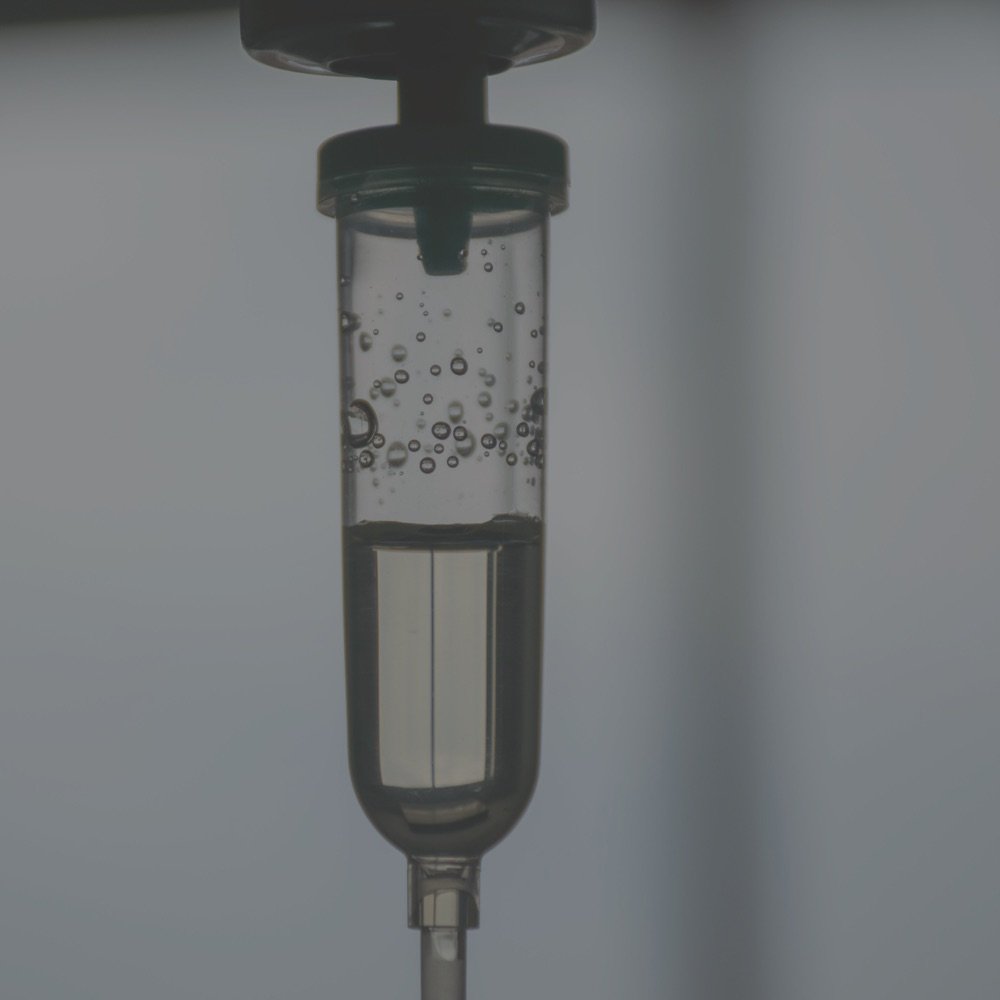
IV migraine therapy is an infusion, usually an anti-nausea agent, fluids, magnesium and an anti-inflammatory. It puts the full dose where it can work within minutes, instead of in a stomach the migraine has slowed. No opioids, no sedation, and most people are here between one and two hours.
It is for a migraine attack that has not broken with oral medication — or where nausea and vomiting make swallowing anything pointless.
Why give migraine medicine by IV instead of by mouth?
Migraine slows gastric emptying (how fast the stomach empties). That is part of the disease, not a side effect of it. It means a tablet taken several hours into an attack may sit in the stomach largely unabsorbed. Vomiting removes the option entirely. Giving the same drug classes intravenously (into a vein) takes absorption out of the equation. It puts the full dose where it can work within minutes.
Does IV migraine therapy work?
For an attack that oral treatment has not broken, yes, and the drugs at its core have better evidence than most of acute headache medicine. The American Headache Society’s 2016 review of 68 randomized trials of injectable migraine treatment found several low-bias trials behind intravenous metoclopramide and prochlorperazine and recommended both as first-line, with dexamethasone recommended to keep the headache from returning (Orr et al., Headache 2016). The same review advised against injectable morphine and hydromorphone as a first choice.
What it does not change is how often attacks arrive. If you are back for an infusion every few weeks, the infusion is working and the plan is not — see when a migraine will not break for where IV therapy fits, and chronic or episodic migraine for the count that changes the conversation.
What is in an IV migraine cocktail?
The combination is chosen for your attack rather than issued as a fixed recipe. But it is generally drawn from four components:
- An anti-nausea agent such as metoclopramide or prochlorperazine. These are not only for the nausea — the dopamine-blocking antiemetics (anti-nausea drugs) have a genuine effect on migraine pain itself. That is why they are a mainstay of acute treatment rather than an afterthought.
- Fluids, where vomiting or poor intake has left you dry. Hydration alone rarely aborts a migraine, and we will not tell you it does.
- Magnesium, which has its clearest evidence in migraine with aura and in patients who are genuinely deficient.
- An anti-inflammatory such as ketorolac. In some cases a single dose of dexamethasone is added — given specifically to reduce the chance of the headache returning over the next day or two.
Does IV migraine therapy include opioids?
No opioids. Opioids are not effective migraine treatment. They interfere with the drugs that are. And repeated use converts episodic migraine into a more frequent and more treatment-resistant pattern. See migraine treatment for how that rebound cycle develops and how it is unwound.
What is an IV migraine therapy visit like?
You are in a chair, not a bed. An IV is placed, the infusion runs, and most people are here somewhere between one and two hours. Metoclopramide and prochlorperazine can cause restlessness in a minority of people. We watch for it and can treat it directly if it appears. You are not sedated and you can drive yourself home unless we tell you otherwise.
Frequently asked questions
Is IV migraine therapy the same as a migraine cocktail?
Migraine cocktail is the everyday name for this kind of IV combination. Ours is chosen for your attack rather than issued as a fixed recipe. It is drawn from an anti-nausea agent such as metoclopramide or prochlorperazine, fluids, magnesium, and an anti-inflammatory such as ketorolac. Sometimes a single dose of dexamethasone is added. It never includes opioids.
Why does the anti-nausea medicine help the headache?
The dopamine-blocking anti-nausea medicines, metoclopramide and prochlorperazine, do more than settle your stomach. They have a genuine effect on migraine pain itself. That is why they are a mainstay of acute treatment rather than an afterthought. A minority of people feel restless after them. We watch for it and can treat it directly if it appears.
Can IV therapy keep a migraine from coming back?
In some cases a single dose of dexamethasone is added for exactly that reason. It is given to reduce the chance of the headache returning over the next day or two. It is chosen for your attack, not given to everyone. Fluids are given when vomiting or poor intake has left you dry. But hydration alone rarely stops a migraine.
Can I drive home after IV migraine therapy?
Usually, yes. You sit in a chair rather than lie in a bed. An IV is placed, the infusion runs, and most people are here between one and two hours. You are not sedated, so you can drive yourself home unless we tell you otherwise on the day.
Why do ER migraine cocktails include Benadryl?
Habit, mostly. Diphenhydramine (Benadryl) was added on the theory that it heads off the restlessness metoclopramide can cause and adds some pain relief. A 2016 emergency department trial in 208 adults with migraine tested both: sustained relief at 48 hours was 40% with it and 37% without, and restlessness was no less common (Friedman et al., 2016). That is why it is not one of our four components: we watch for restlessness and treat it if it shows up. See how the IV visit covers a medication wean.
Sources
- Eken C. Critical reappraisal of intravenous metoclopramide in migraine attack: a systematic review and meta-analysis. The American journal of emergency medicine, 2014. PMID 25579820. pubmed.ncbi.nlm.nih.gov
- Chiu HY, Yeh TH, Huang YC, et al. Effects of Intravenous and Oral Magnesium on Reducing Migraine: A Meta-analysis of Randomized Controlled Trials. Pain physician, 2016. PMID 26752497. pubmed.ncbi.nlm.nih.gov
- Marmura MJ, Silberstein SD, Schwedt TJ. The acute treatment of migraine in adults: the american headache society evidence assessment of migraine pharmacotherapies. Headache, 2015. PMID 25600718. pubmed.ncbi.nlm.nih.gov
Booking online shows our scheduled openings; call or text for hours that are not listed. Please contact us before coming in rather than arriving unannounced — we need to know what is happening to have the right treatment ready.
A note on coverage, and on timing. Same-day treatment and prior authorization do not run on the same clock. Many insurers take days to weeks to decide, and some acute headache treatments are not covered at all. Your headache will not wait for that process.
We will verify your benefits and, where a treatment needs prior authorization, we will attempt to obtain it. An authorization confirms that a service meets criteria for review — it is not a guarantee of payment, and no clinic can make that promise on your insurer’s behalf. Where something is unlikely to be covered, or cannot be certified in time to treat you today, we will tell you before we treat rather than after, so the decision is yours. Payment is due at the time of service.