A keto headache comes from salt and water loss. When you cut carbs, insulin falls and your kidneys let go of sodium and water. The fix is more salt (2 to 3 grams of sodium a day), potassium from vegetables, and enough fluid. It usually starts on day two or three and fades within days.
Here is the part most keto advice gets wrong. The pain is not your brain running out of sugar. It is a plumbing change that starts in the kidney. Treat it as a salt problem, not a bread problem, and it usually settles on its own.
Why does a low-carb diet give me a headache?
Insulin does more than move sugar. It also tells your kidneys to hold on to salt. Cut the carbs and insulin drops within days. Your kidneys then release sodium, and water follows the sodium out. Your blood volume shrinks a little. Your blood pressure can dip. Your head feels that change as a dull, pounding ache.
The 2026 guideline from the Society of Metabolic Health Practitioners names this salt and water loss as the main driver of start-up symptoms. Its list starts with headache. Then come fatigue, light-headedness, poor focus, mood changes, cravings, muscle cramps and constipation.
There is a third driver, and it sits on the grocery shelf. Most of the salt in the standard American diet comes in packages and restaurant food. Quit chips, bread and drive-through meals on Monday, and your salt intake drops the same week your kidneys start dumping it. The food industry loaded your old diet with salt. When you leave that diet, you have to add salt back on purpose.
How long does a keto headache last?
The guideline says start-up symptoms begin within 2 to 3 days. Most last a few days. Some last 2 to 4 weeks. That is why day two or three often feels like the hardest day of keto. It does not mean the plan is failing. It means your insulin is coming down.
A headache that keeps going past a month, or gets worse each week, does not fit the start-up pattern. Get it checked.
How do you get rid of a keto headache?
Put back what the kidneys let go. The guideline gives plain numbers.
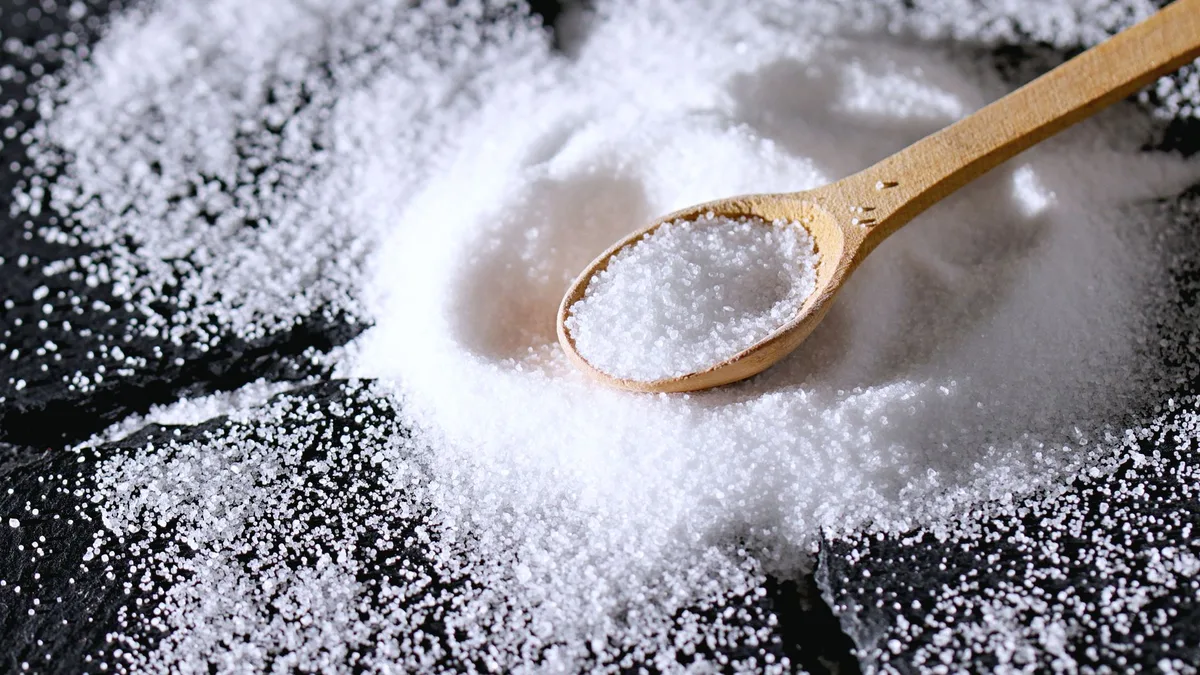
- Sodium: 2 to 3 grams a day. That is 5 to 7 grams of salt, about one teaspoon. Salt your food freely, or sip salted bone broth.
- Potassium: 3 to 4 grams a day, from food. Spinach and other leafy greens, tomatoes, cucumbers, zucchini and eggplant all count. A “light salt” that mixes potassium and sodium also helps.
- Fluid, with the salt. The guideline calls water and sodium the key to the first weeks. Its fluid floor is at least 2 liters a day. Plain water alone will not replace the salt you lost.
- Magnesium if cramps come along. The dose is 200 to 400 mg of elemental magnesium a day. Magnesium glycinate is well absorbed and easy on the gut. Skip it if you have kidney disease, are pregnant, or have a nerve and muscle disease. A spoon of pickle juice or yellow mustard is also on the list.
- Enough food. The guideline notes that eating enough in this phase may ease symptoms. Low-carb is not a hunger diet. Protein comes first, about 25 to 30 grams per meal.
Store-bought electrolyte drinks may help too, the guideline says. Read the label first. Many are sugar drinks with a pinch of salt.
Who should not treat it alone?
Some headaches on low-carb are a medicine problem, not a salt problem. Blood pressure pills and water pills keep working while your body sheds salt on its own. Your pressure can drop too far. The warning signs the guideline names are light-headedness when you stand up and heavy fatigue. Diabetes drugs can push blood sugar too low. The first 2 to 3 days carry the greatest risk.
The guideline also lists drugs that can push sodium too low, and some are headache treatments. NSAIDs such as ibuprofen are on it, along with opioid pain medicines and several antidepressants used to prevent headaches, such as amitriptyline. Taking them while your kidneys shed salt can make the drop bigger.
So here is the one rule. Your doctor makes medication changes, not you. That goes double for insulin, sulfonylureas, SGLT2 inhibitors and blood pressure drugs. The guideline asks people on these drugs to check blood pressure at home every day. If you have diabetes, check blood sugar daily too, with some readings 1 to 2 hours after a meal. Bring the numbers to your visit.
Salt advice changes for some people. If you have heart failure, kidney disease or salt-sensitive high blood pressure, let your doctor set your salt amount before you add any.
When is a headache on keto not keto flu?
A start-up headache is dull, builds slowly and eases with salt. The ones below do not fit that pattern. Go to an emergency room for any of them.
- A headache that peaks within seconds to a minute.
- A headache with fever and a stiff neck.
- Weakness, numbness, confusion, trouble speaking or loss of vision.
- A headache after a blow to the head.
- A new or changed headache after age 50.
The full list is in headache red flags: when to go to the emergency room.
Can low-carb help migraines?
It may, and the research is still going on. The guideline lists migraine among the brain conditions where ketogenic diets are being studied. It notes that these brain uses may need deeper ketosis than weight loss does. It also names migraine as one condition whose medicines may need review as metabolic health improves.
Dr. Padda did not always think this way. For years he was a strict vegetarian who taught the low-fat rules. The physiology changed his mind, and he says so. Today he treats migraine as part of the whole metabolic picture, not a brain glitch on its own. On his plate, industrial seed oils come out and refined grains go. Real olive oil stays. Red meat and fish are welcome. Those are his positions. The guideline does not name seed oils.
One plain note about the guideline. It is an expert consensus, built from a panel vote and a broad but non-systematic review of studies. It is not a clinical trial. Its value here is practical: clear numbers for salt, fluid and medicine checks. Dr. Padda holds the society’s Metabolic Health Practitioner credential. He did not write or vote on this guideline.
What should I do if my head hurts on day three?
A keto headache is a side effect you can fix, not a verdict on the diet. Salt your food. Eat your greens. Drink with the salt, not instead of it. Keep your doctor in the loop on every pill you take. If the headache is severe, strange or will not quit, we see headache patients in St. Louis, usually the same day.
Questions about keto headaches
Should I quit low-carb if I get a headache?
Usually not. Start-up headaches come from salt and water loss and tend to pass within days to a few weeks. Add salt, potassium-rich vegetables and fluid first. If the headache is sudden, severe or comes with other symptoms, see headache red flags.
Do electrolyte drinks help a keto headache?
They can. The guideline says store-bought electrolyte solutions may be useful in the start-up weeks. Check the label for sugar. Salted bone broth does the same job with no sugar at all.
Why do I still get headaches on keto after two months?
The start-up phase usually ends within 2 to 4 weeks. A headache that returns months later has another cause. It may be a medicine that now needs a new dose, or a headache disorder of its own. That needs an exam. See migraine or tension-type headache.
Sources
- Rice SM, Buchanan LA, Calkins MW, Cucuzzella MT, Cywes R, Devine PL, Kalamian M, Kalayjian T, Reynolds DB, Westman EC. A Delphi consensus-based guideline for the implementation of therapeutic carbohydrate reduction in metabolic disorders. Journal of Metabolic Health. 2026;9(1):a152. doi:10.4102/jmh.v9i1.152